News

Paperboard vs. Aluminum Foil Trays: Which Works Best for Oven-Ready Meals?

2026-11-12 0 Leave me a message

When selecting food trays, it is essential to consider multiple factors, isn't it? The features is including food safety, production line compatibility, cost, and recyclability. In recent years, the European packaging industry has seen frequent mergers and acquisitions; International Paper and Mondi have both completed acquisitions, and MM Group also plans to spin off its packaging business into a separate entity.

There are no uniform selection standards for paperboard and aluminum foil trays used in oven-ready meals; the choice must be made based on a comprehensive evaluation of the specific application. Next, let's take a closer look at this issue.

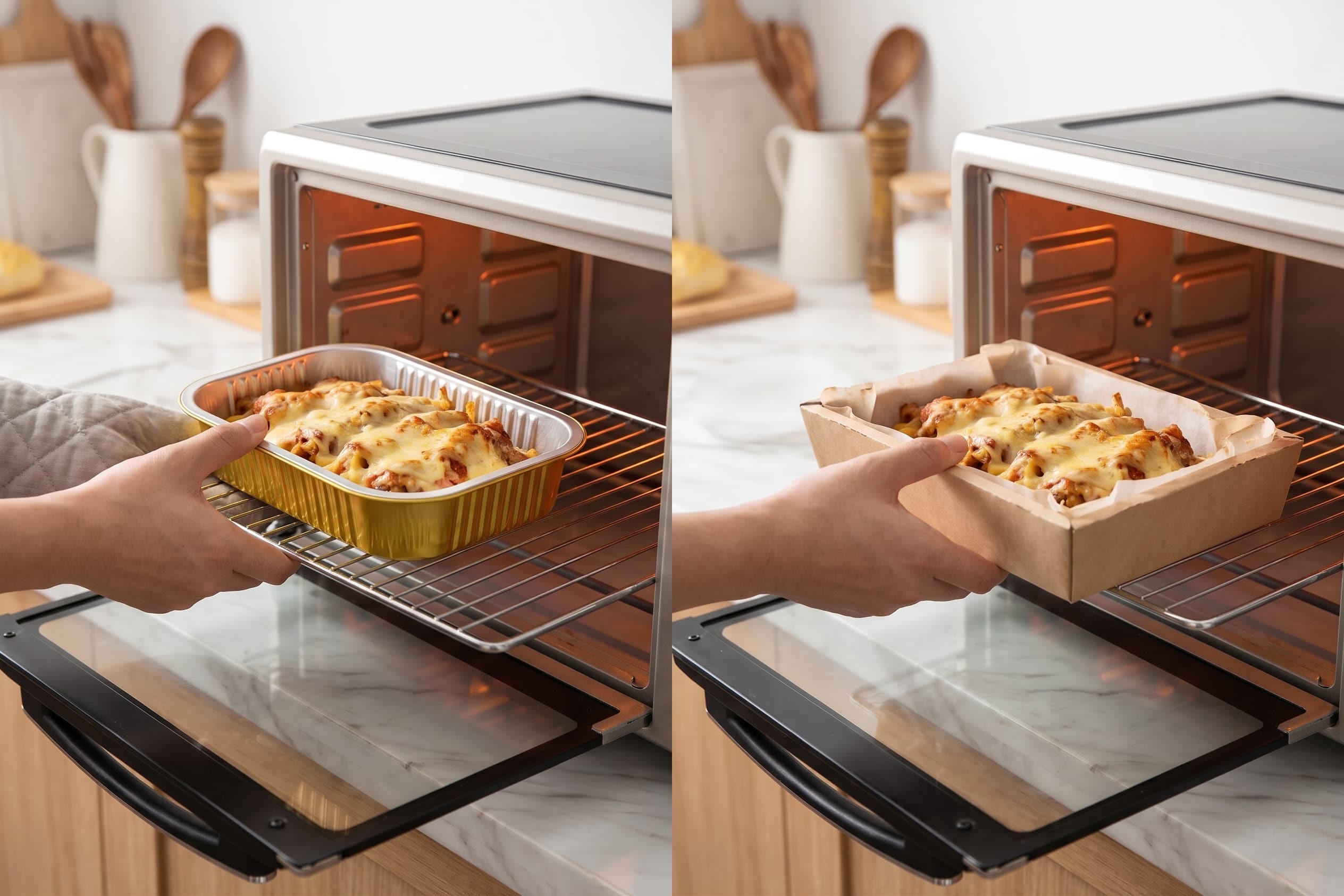
When It Comes to Heating: How Do Packaging Trays Hold Up in an Oven?

Paperboard can go in the oven—but only if it’s specifically designed for that purpose.

“Ovenable paperboard” is a specially engineered packaging structure that is fundamentally different from ordinary paperboard. Depending on the product being packaged, it may combine specific grades of paperboard with barrier coatings or sealing layers to effectively control moisture and grease. While the material of the paperboard itself is important, the coatings, adhesives, inks, varnishes, and sealing methods are equally critical. The entire packaging structure must be capable of withstanding the corresponding heating process.

Some paperboard packaging on the market is suitable for both microwave ovens and conventional ovens. For example, Holmen states that its PET-coated paperboard can be used to manufacture trays suitable for both types of heating equipment; depending on the food load within the tray, it can withstand temperatures up to 220°C. This data applies only to this specific product and its specified conditions of use and does not represent a universal standard for all paperboard packaging. When selecting trays, be sure to confirm their final structure, food load, heating duration, and any restrictions regarding lids or printed areas.

I think this type of packaging is ideal for ready-to-eat meals—consumers can heat them up right at home. However, even though such packaging may be labeled as “oven-safe,” it may not be suitable for extended baking or other high-temperature cooking methods. This point is often overlooked.

Aluminum Conducts Heat Efficiently—But Details Are Still Critical

Aluminum’s great at conducting heat. That’s why you see so many aluminum trays used for pies, lasagna, roasted meats, baked desserts, and ready-made meals. But honestly, it’s not just the material that decides how your food turns out. The tray’s shape, how thick the foil is, how deep the food sits, the weight, and even the air flow—these all matter. Good thermal conductivity helps, sure, but don’t expect every dish to cook the same just because it’s in an aluminum tray.

If you like meals that go straight from oven to table, smooth-wall aluminum containers make things easy. You can prep, bake, and serve all in one container. In busy kitchens, this cuts down on food transfers and keeps things efficient. Some containers even work for “from frozen to oven,” but before you try it, check the specific tray and packaging. Not every lid or seal handles temperature swings. Don’t just assume they’re all built for that.

There’s something a lot of buyers miss: not all aluminum trays are safe for microwaves. The European Aluminum Foil Association (EAFA) points out that the Fraunhofer Society tested heating food in aluminum containers under strict controls. But just because one test went well doesn’t mean every metal tray is fit for microwave use. Only use trays that say “microwave-safe,” and stick to the instructions—both on the tray and in your microwave’s manual. Placement, shape, and even how close it sits to other items all matter.

And it’s not just about the tray—the food itself matters a lot, too. The German Federal Institute for Risk Assessment (BfR) warns against using uncoated aluminum trays with highly acidic or salty foods, especially when heating, keeping warm, or storing for a long time. For these situations, go with coated aluminum. When picking a tray, look closely at the coating, your actual recipe, how long the food sits in the tray, and the temperature. Just seeing “food-grade aluminum” isn’t enough to guarantee food contact safety.


The oven is just one step in the entire process

The oven is one step in the whole process. If a tray works well in the oven that does not mean it will perform as well when it is filled, sealed, stacked or transported to the customer. Therefore buyers must examine the workflow instead of focusing only on heat testing.

Paperboard earns its place in situations

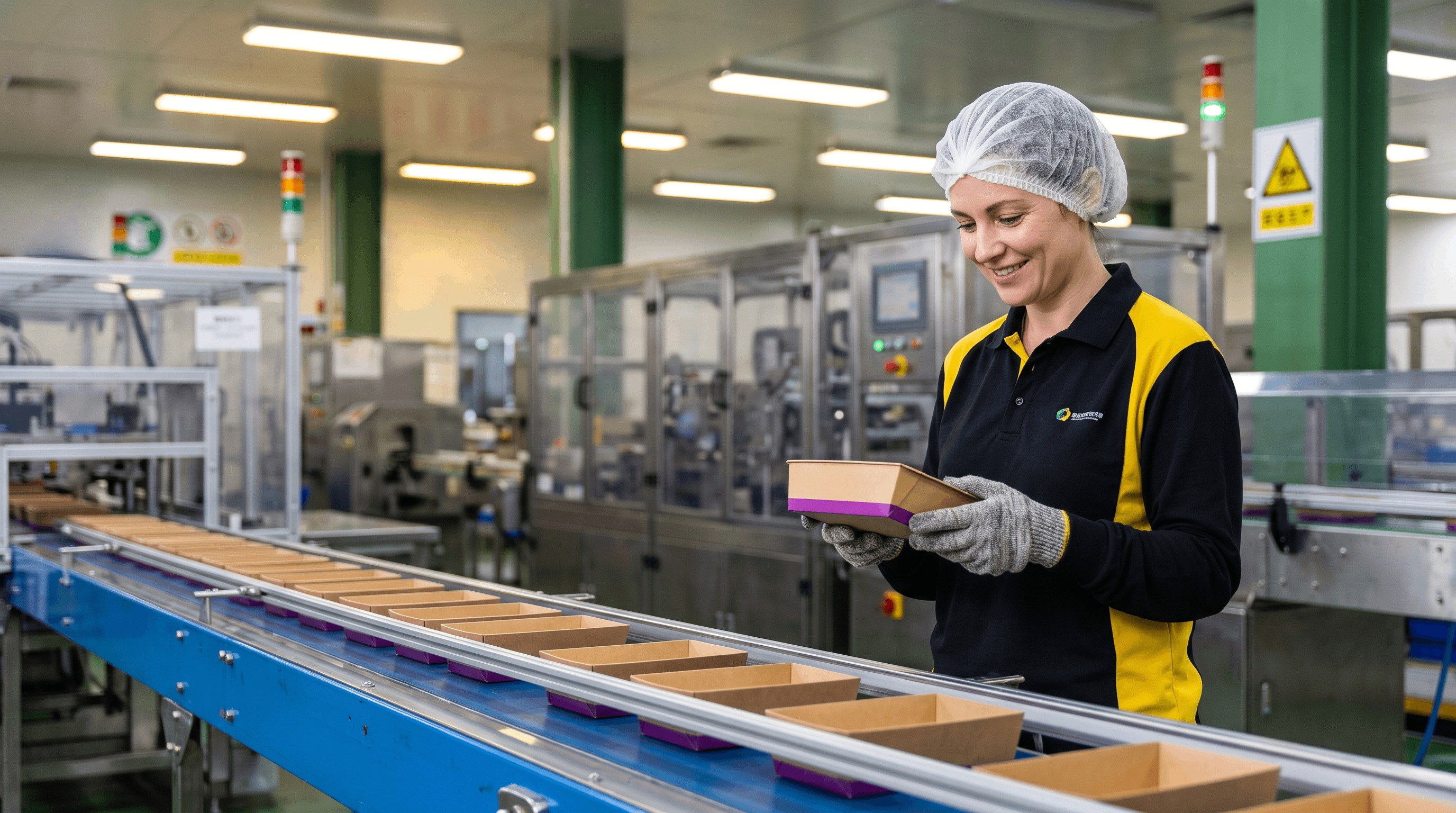
Paperboard packaging performs exceptionally well for retail ready-to-eat meals that consumers heat at home, especially when brand information needs to be printed on the packaging. Well-designed trays can combine printable surfaces, functional barrier layers, and suitable sealing systems. However, their moisture and oil resistance depend on the specific grade and structure of the paperboard. It is essential to evaluate how the packaging performs in refrigerated environments, under humid conditions, and when actually containing specific foods; At the same time, do not overlook the sealing process.

Aluminum fits best in settings

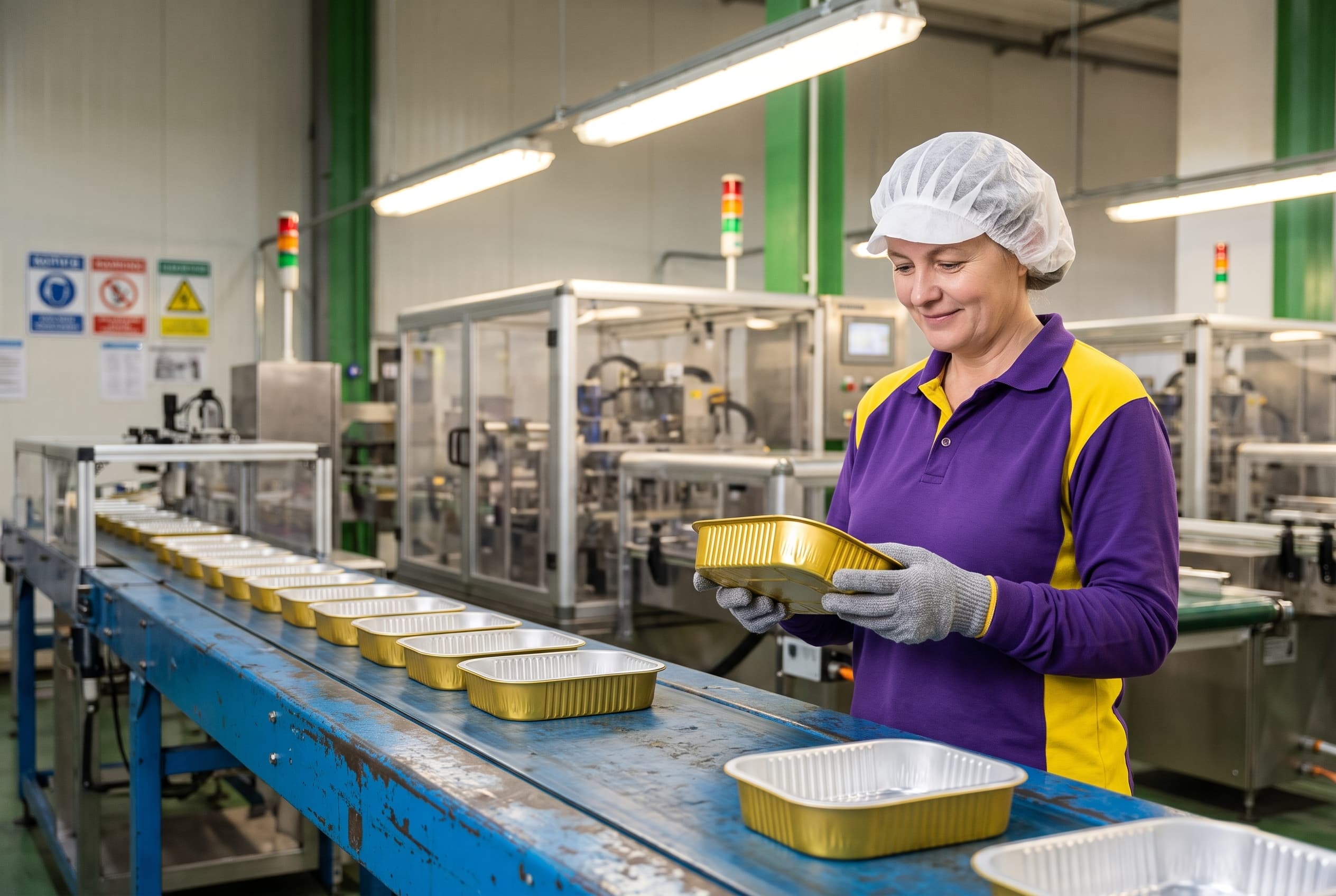
Aluminum foil containers are very common in bakeries, foodservice operations, food manufacturing and institutional kitchens. They are often used to hold pies, tarts, baked goods, roasted meals, meal kits takeout food and some frozen foods. Completing food preparation, heating, transport and service within an aluminum container can streamline busy workflows. It is important to verify that the aluminum lid fits seals stacks strongly and performs during daily handling together with the actual product.

Looks matter: what does the customer see?

Paperboard gives brands a lot of freedom. There is space for eyecatching graphics detailed product info, bold colors and seasonal themes. That is why paperboard appears everywhere: meals, storebrand products anything that needs a strong consistent look, on the shelf. If the goal is to grab attention paperboard offers plenty of options.

Aluminum feels different. Its metallic finish looks clean and practical. You can still play with its appearance. Add a color coating. Emboss a logo for extra flair. The smooth surface helps every aluminum tray match up which matters during production runs. For bakery and catering sometimes it is better to let the food stand out of the package. Gold aluminum trays work great for highend desserts; a simple silver tray might suit meal portions. In the end the food and the brand’s personality should do the talking.

Recycling is not as simple as the label makes it sound

When you see “recyclable” on packaging, it feels reassuring, but that word doesn’t really explain the whole process. The packaging needs to be collected, sorted, and processed—and that’s different depending on where you are in Europe. Some systems work better than others, and they don’t all handle the same materials in the same way.

A quick side-by-side for purchasing teams

What to compare

Paperboard tray

Aluminum foil tray

Heating

Oven and microwave use depends on the specific board/coating system and its tested limits.

Efficient heat transfer for conventional oven use; microwave use only when the specific tray and appliance instructions allow it.

Presentation

A broad printable surface for graphics, colors, and product information.

A metallic finish; selected models can also use color coatings or embossing.

Food contact

The board, coatings, sealants, inks, and full construction must suit the food and temperature.

Consider the alloy, coating, food acidity or salt, contact time, and temperature.

Recycling route

Paper-fiber recovery; repulpability and non-fiber components matter.

Metal collection and sorting; design, pack size, food residue, and local infrastructure matter.

Typical fit

Retail ready meals, printed packs, and validated dual-ovenable applications.

Baking, catering, oven-to-table meals, and other validated foodservice uses.


Custom foil trays: when standard sizes do not quite fit

Standard packaging does not fit every portion, filling line, heating cycle, or delivery route. That is where custom foil trays can help. Instead of squeezing a product into whatever size happens to be available, a food business can develop a tray around the meal and the way it is made.

Start with the opening, base dimensions, depth, and portion size. Then look at the shape, foil thickness, rim, finish, embossing, and lid. A thicker tray is not automatically a better tray. The aim is to get the right balance of rigidity, forming performance, weight, and cost for the job.

A frozen-meal producer may need a tray that has been checked for its specific freezing and heating cycle. A catering group may care more about consistent portions, stackability, transport, and how quickly staff can close the pack. A good OEM/ODM project starts with those details. From there, the buyer and supplier can work through drawings, mold options, samples, and checks for repeat production.

Before you place an order, ask a few good questions

Don’t just grab the first supplier who sends you a decent quote. Take your time and ask questions that actually matter for your business.

Start with the basics: What material grade do they use for the containers? How much does the thickness vary? Is there any coating, paint, or special finish? Ask for a food contact compliance statement, along with test reports and any migration data they have. Go through the reports and make sure they mention the exact model you’re looking at, the type of food you’ll be packing, how long the food sits in the container, and at what temperature. Don’t let anyone skim past details—those matter most.

Then get into how this container is tested. Can it go in the oven, microwave, fridge, or freezer? Is it safe to pull straight from the freezer into the oven? Never just assume. Check if the lid matches, how it seals, if they’ve tested it for leaks or transport, and whether you’re supposed to take the lid off before heating.

Recycling rules aren’t just an afterthought—ask about those for your main market too. How should you sort each part—lid, label, seal—for recycling in the country you’ll sell in? And of course, see if the molds are ready, whether you can customize the product, and how they handle quality control, sample approval, delivery timelines, and repeat orders.

Selling in the EU? The rules get even stricter. The EU doesn’t use a single standard for all metals, so don’t take “food-grade” at face value. Get paperwork that proves your exact model fits the local requirements.

And honestly—never just trust what's written in a report. Try out the samples yourself. Put in actual food or something close, and run them through the real steps they’ll face. Test how well they seal, if the texture holds up, and if the look stays sharp after use. A lower price might look nice, but if the sizes are off or the lids don’t fit, all those savings disappear fast.

Why Choose Yunchu in B2B Packaging Projects

Foshan Yunchu Aluminum Foil Technology Co., Ltd. has been around since 2004, making aluminum foil containers for B2B clients. They cover a lot—flat-sided trays, silver and gold food service trays, baking cups, airline meal trays, and even custom packaging for baking, food service, takeout, processing, and ready-to-eat meals.

Yunchu runs over 20 automated production lines, owns more than 1,000 molds, and has an in-house R&D team and their own quality inspection center. They’re certified for ISO 9001 Quality Management and SGS food-grade safety. Right now, they serve customers in 50+ countries, collaborate with over 300 brands, and have solved plenty of tough packaging problems.

They handle OEM/ODM projects covering everything from size and shape to thickness, color, custom logos, and lid choices. If you’re working with them on something like flat-sided trays, you get to discuss all the details—type of food, portions, equipment, handling, logistics, and how you want things to look. All that early discussion means you catch and fix problems like lid mismatches or automated line issues before they become headaches.

Yunchu believes real packaging solutions come from understanding how clients actually use their products. With experience in manufacturing, development, and quality control—plus a flexible B2B approach—they focus on helping partners build strong, reliable supply chains for food packaging.

So, which tray should you choose?

Start with the food and the process, not a material slogan. Paperboard can be a good fit for printed retail meals and specifically engineered dual-ovenable applications. Aluminum foil can make sense for conventional oven cooking, baking, catering, and oven-to-table formats where heat transfer and the metal structure are useful. Both need to be matched to the food, closure, heating conditions, and the local end-of-life route.

For B2B buyers, it helps to look at the whole packaging system: the food itself, oven type, temperature and heating time, food-contact requirements, lid performance, logistics, recycling infrastructure, and total operating cost. When a standard format is not quite right, custom foil trays and a well-planned OEM/ODM project may be worth exploring.

Yunchu works with food manufacturers, catering suppliers, and packaging distributors on standard and customized aluminum foil packaging. Planning an oven-ready meal project? Share the food type, portion, heating conditions, lid requirements, and expected order volume with the team. If you’re currently planning a purchase but aren’t sure of the specific type or specifications, you can start by checking out these recommendations: 6418, 63200, 63100, 2335, or click here to see more.

References and further reading

[1] International Paper: completion of the DS Smith acquisition (31 January 2025) — SEC filing. Source

[2] Mondi: completion of the acquisition of Schumacher Packaging’s Western European operations (1 April 2025) — Mondi official release. Source

[3] MM Group: agreement to sell a 70% stake in its Packaging business to KPS (9 November 2026) — MM Group official announcement. Source

[4] Holmen: PET-coated paperboard technical information — Product-specific paperboard heating guidance. Source

[5] European Aluminium Foil Association: heat conductivity of aluminum foil containers — Industry technical overview. Source

[6] European Aluminium Foil Association: aluminum foil and microwave ovens — EAFA summary of Fraunhofer testing; use remains subject to product and appliance instructions. Source

[7] German Federal Institute for Risk Assessment (BfR): FAQs about aluminum in food and consumer products — Guidance on acidic/salty foods and uncoated aluminum. Source

[8] Cepi: paper-based packaging recyclability guidelines — Fiber recovery, coatings, laminates, and national systems. Source

[9] European Aluminium Foil Association: design-for-recyclability guidelines — Includes convenience-food aluminum trays. Source

[10] European Commission: food-contact materials — EU food-contact framework and GMP. Source

[11] EDQM: European requirements for food-contact metals and aluminum packaging — Explains the general framework and Council of Europe technical guide. Source

[12] Yunchu: Company Strength — Company-published factory, capacity, and certification information. Source

[13] Yunchu: Smoothwall Aluminum Foil Containers — Company-published product information. Source

Related News
Leave me a message
X
We use cookies to offer you a better browsing experience, analyze site traffic and personalize content. By using this site, you agree to our use of cookies. Privacy Policy
RejectAccept