News

EU PPWR 2026: A Buyer’s Guide to Aluminum Foil Containers

2026-11-06 0 Leave me a message

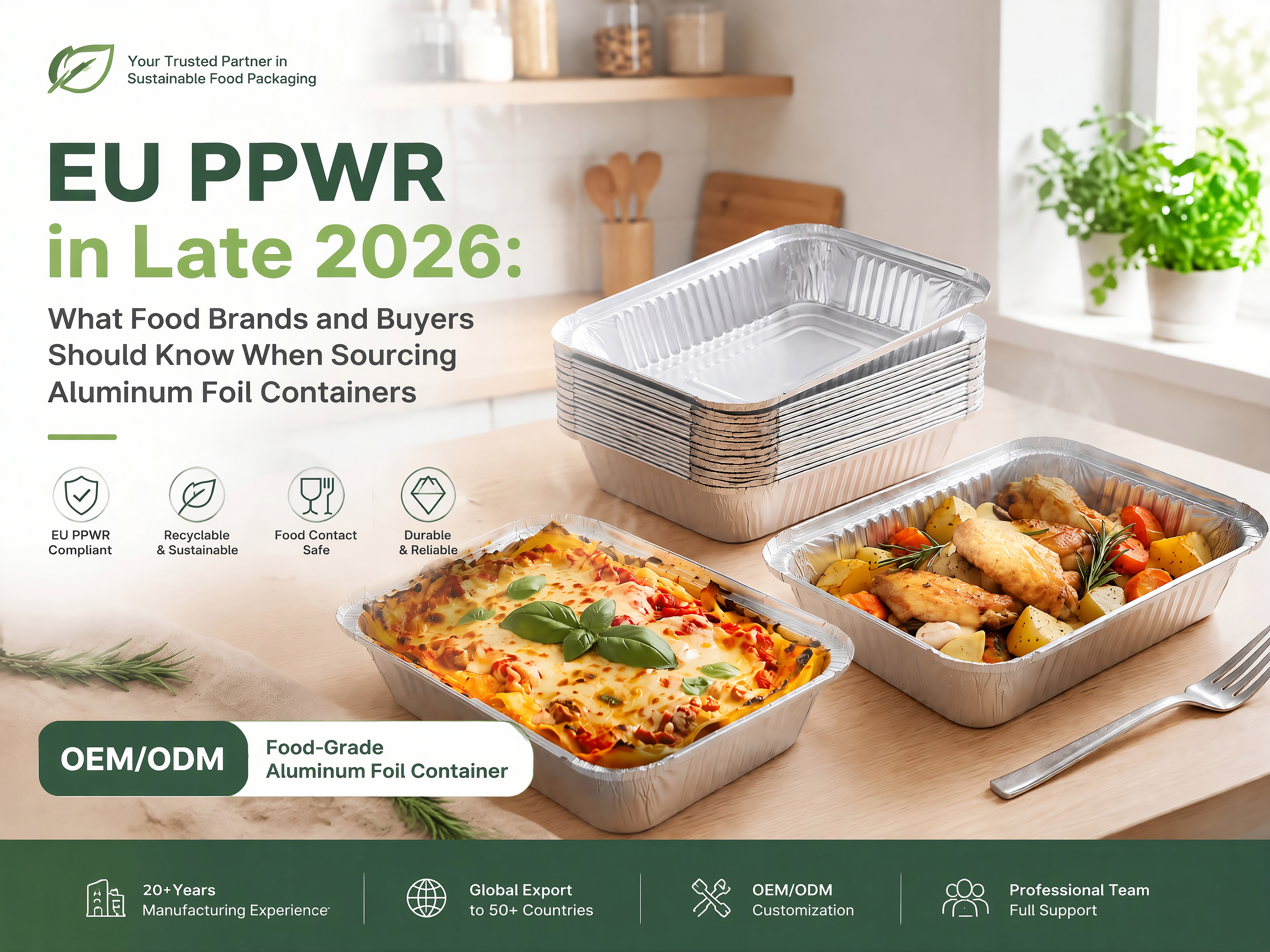
The EU PPWR Is Now in Effect: Why Food Packaging Procurement Professionals Must Pay Close Attention

The EU’s new Packaging and Packaging Waste Regulation (PPWR) just took effect—and anyone involved in food packaging for the European market needs to sit up and pay attention.


If you’re a food manufacturer, you run a catering business, you import packaging, or you supply the foodservice sector, your choices around packaging have never mattered more. Suddenly, there’s real pressure to make sure your packaging matches up with the EU’s stricter standards for design, materials, recyclability, waste prevention, and the way packaging gets handled from start to finish.


This isn’t just about cutting back on plastic anymore. The new rules look at the full picture: can your packaging actually get collected, sorted, and recycled efficiently? Does it avoid causing environmental headaches or wasting resources along the way? The EU wants packaging that fits neatly back into the production loop without making things worse for the planet.


So, procurement folks—your checklist has to change. It’s not enough for a container to work well during filling, transport, or heating. Now you’ve got to factor in its whole structure, the surface treatments, how it seals, and, maybe most important, what happens at the end of its life. These nitty-gritty details matter a lot more than they used to when you’re selecting packaging for Europe.


Take aluminum foil containers, for example. They’re lightweight, they conduct heat well, and the recycling systems are already in place. Sounds pretty good, right? Sure—but just picking aluminum doesn’t tick all the boxes. You’ve got to look at the full design and performance of the package to make sure it truly fits the new rules.


As we get closer to the end of 2026, food brands can’t just ask, “Which container is the cheapest?” The bigger question is how to balance protecting your food, keeping operations running smoothly, meeting branding needs, and staying in line with long-term EU regulations. That’s where smart packaging choices come in.


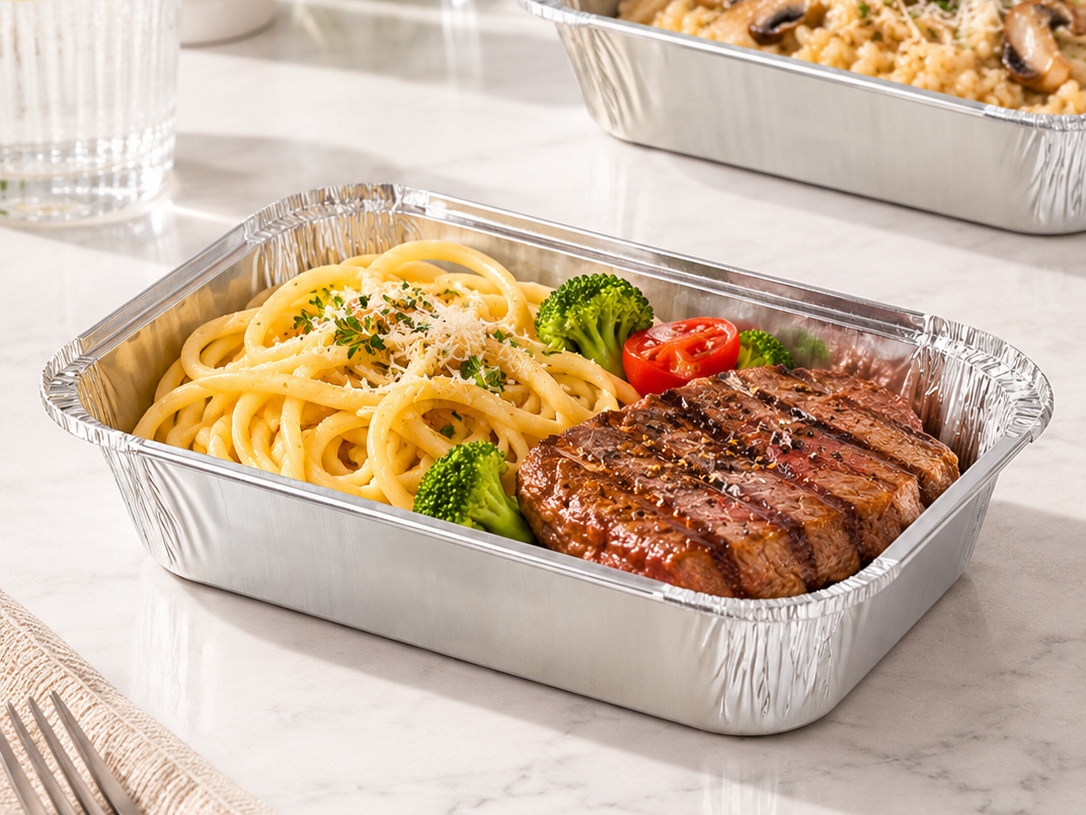
food packaging foil container (1)


PFAS Restrictions: A New Consideration for Food-Contact Packaging

Under the EU’s Packaging and Packaging Waste Regulation (PPWR), PFAS—those so-called “forever chemicals”—are in the spotlight. People use them in food packaging because they repel water, oil, and grease. You’ll find PFAS in things like greaseproof paper, takeout boxes, baking paper, and other materials that come into contact with food.


The problem? PFAS stick around in the environment for a very long time. Scientists have found links between these chemicals and health risks when people are exposed to certain types.


The rules are changing soon, and they’re pretty clear. Starting August 12, 2026, if you want to place food packaging on the EU market, you have to make sure it stays below specific PFAS concentration limits:


- One PFAS measured by targeted analysis: no more than 25 ppb (not counting polymeric PFAS)

- Total PFAS sum (including what comes from degraded precursors): maximum 250 ppb

- All PFAS together (polymeric included): maximum 50 ppm


If the total fluorine in the material goes above 50 mg/kg, you’ll need documents proving whether that fluorine comes from PFAS or from something else entirely.


This matters most if you're using packaging with grease-resistant coatings or other chemical surface treatments. But don’t jump to conclusions—just because something’s paper, doesn’t mean it automatically has regulated PFAS, and not all metal containers are free from them either. You need to know exactly what’s in your packaging.


As for aluminum foil, it's just metal at its core and doesn't usually rely on fluorine-based barrier layers. But that’s not the whole story. Pay attention to any coatings, inks, adhesives, sealants, or other extras. These parts could be a source of PFAS too.


A responsible foil container manufacturer should give you straightforward answers about the materials and surface treatments they use—not just blanket statements like “our aluminum is safe.” If you’re buying packaging, ask for detailed material declarations, supplier statements, and up-to-date test reports based on the specific packaging you’re actually using. And if you need to test for PFAS, make sure the lab uses the right method for your type of packaging and the legal limits.


If you need the formal details, check Regulation (EU) 2025/40


Recyclability under the PPWR: Why Packaging Design Matters More Than Ever

One of the big things with the PPWR (Packaging and Packaging Waste Regulation) is its push for recyclable packaging. Basically, if it’s going to be sold in the EU, it needs to be recyclable. But the rollout isn’t all at once. Buyers have to pay attention to what’s required right now versus what’s coming soon—a lot of the tougher rules are set for the next few years.


The European Commission is supposed to drop clearer guidelines in June 2026. That’s when the general requirements from Article 6(1) kick in, officially starting August 12, 2026. About three and a half years later—January 1, 2030, or two years after the new delegated acts arrive, whichever’s later—packaging will have to meet stricter design-for-recycling rules. This includes giving products a recyclability grade (A, B, or C).


Looking even further ahead, there’s another set of requirements planned for 2035. Those will focus on whether packaging can actually be recycled at scale, and timing depends on how regulators decide to move forward. These deadlines matter a lot to buyers. Just because a package looks recyclable doesn’t mean it’ll handle the reality of the EU’s waste system.


Take something like a takeaway food container. The base might be aluminum, but the lid could be plastic, paper, or some kind of sealing film—and then you’ve got labels and finishes layered on top. All these pieces affect how the package’s handled in the recycling stream.


So, just checking the main container isn’t enough. Packaging engineers and brands in Europe really need to think about how every part fits together—from the container and lid to the seals and labels. Good design means making sure every material can get recognized, separated, and managed through the right recycling channels.


This is a big deal especially for those custom aluminum trays used for meals, airline food, baked stuff, and massive takeaway orders. Design isn’t just about how they look or how much they hold. When these trays are being developed, you’ve got to factor in how the flanges work, which lids make sense, which materials are best, how things are labeled, and—maybe most importantly—how everything will be disposed of in the end.


What’s really important, PPWR doesn’t force food brands to dump their current composite packages for single-material metal ones. Instead, it raises the bar on design and recyclability, step by step. Brands have to keep up and improve, not just swap materials and call it a day.


You can consult the European Commission’s guidelines on the implementation of the PPWR for further details.


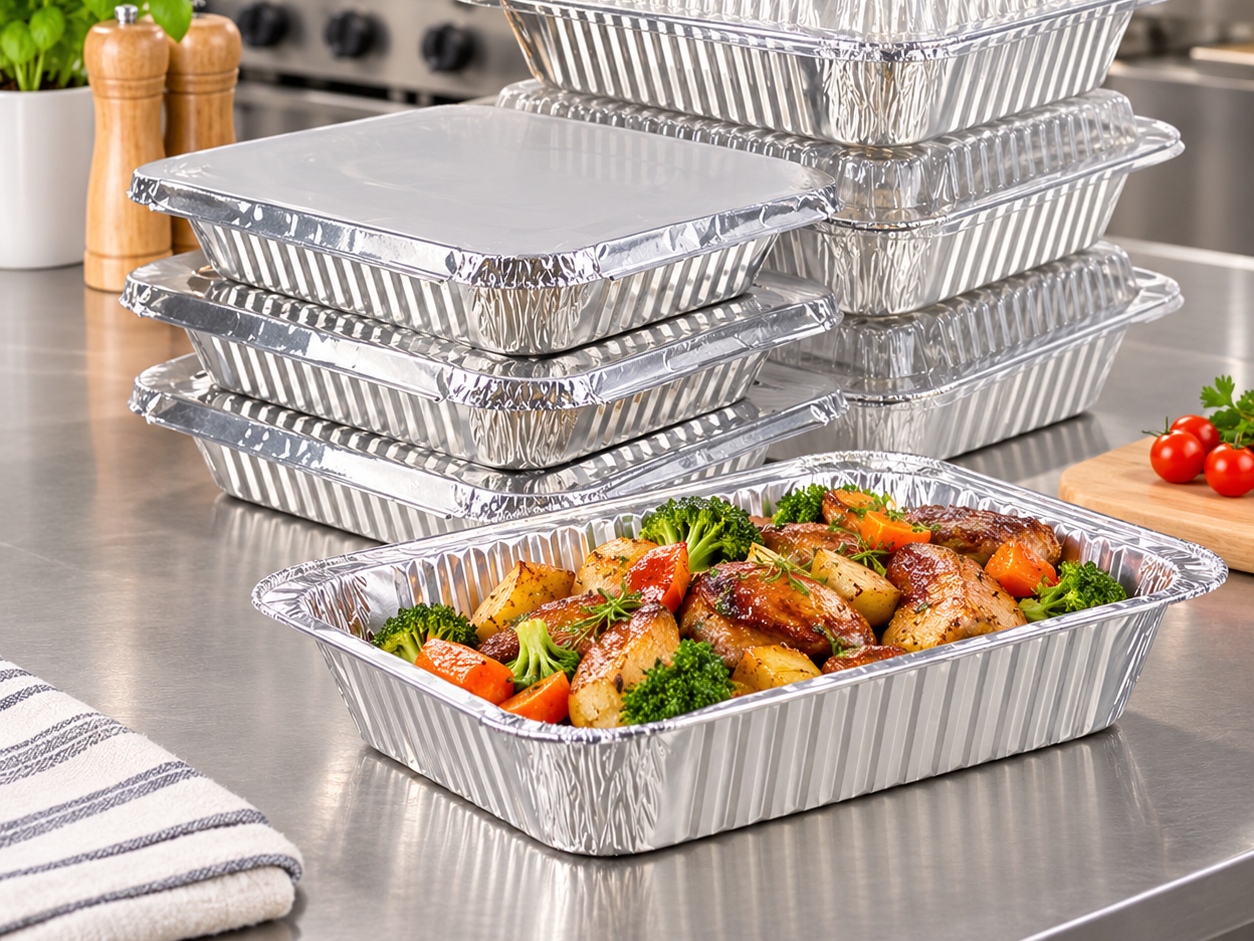
food packaging foil container (2)


Why Aluminum Foil Packaging Has a Place in Sustainable Foodservice Strategies

Aluminum possesses a range of material properties that make it an ideal choice for food packaging.


One of its most significant advantages is its recyclability. According to European Aluminium, the metal can be recycled repeatedly without losing its original material properties. The recycling process requires only about 5% of the energy needed to produce primary (virgin) aluminum.


While this offers substantial resource efficiency, the actual environmental benefit of any packaging solution still depends on factors such as collection rates, sorting infrastructure, transportation, product weight, and recycling conditions. Aluminum offers numerous practical advantages for food preparation and distribution.

Thermal Conductivity

Aluminum is highly thermally conductive; therefore, when packaging containers are properly designed, they are well-suited for a variety of baking, roasting, reheating, and food preparation applications. This is particularly important for commercial kitchens and catering operations that rely on standardized preparation processes.

Lightweight Construction

Compared to many heavier packaging alternatives, aluminum foil containers strike an excellent balance between low weight and structural performance. This is especially beneficial for foodservice businesses that handle large volumes of pre-prepared food.

Barrier Properties

In a well-designed packaging system, aluminum acts as an effective barrier against light, moisture, oxygen, and external contaminants. These properties help protect food products during storage and transportation.

Flexible Product Design

Aluminum foil can be formed into a wide range of shapes, thicknesses, and sizes. This allows manufacturers to develop packaging tailored to specific portion requirements and operational environments.


These characteristics explain why aluminum foil containers remain widely used across various B2B sectors—from bakery packaging and disposable catering trays to airline meal containers and food processing applications.


However, recyclability should not be assumed simply based on the material chosen. Buyers must verify the actual recycling process, as the finished packaging must align with local collection and recycling infrastructure.


An experienced foil container manufacturer of aluminum foil containers should be able to discuss these considerations in the context of the product’s physical specifications.


The Role of Lid Sealing and Custom Container Design

When choosing packaging, people usually zero in on the aluminum base and overlook how important it is to get the lids right. But honestly, the way a container seals matters just as much—maybe more—if you want your packaging to hold up during transport, look good, and fit with how your team actually uses it.


Take a catering business. They need lids that lock tightly so food doesn’t spill when containers get stacked or moved. At the same time, staff need to pop them open quickly. A bakery, on the other hand, is all about showing off their pastries, so clear lids that highlight what’s inside really matter. And for airline caterers, the lid has to fit into a streamlined prep and serving process where every detail counts.


All those different goals mean you can’t treat lids as a minor detail. They play a big part in shaping your packaging decisions.


In certain applications where a metal closure is required, an aluminum foil lid may be the most appropriate solution. Transparent polymer lids offer product visibility, while other sealing systems may provide specific advantages in terms of handling or transport.


No single lid solution is suitable for every application.


Therefore, buyers should consider the following factors:


1. Whether the lid matches the container’s opening dimensions and flange configuration.

2. Whether the closure provides sufficient security during storage and transport.

3. Whether the materials can be separated through intended recycling streams.

4. Whether the entire packaging system has been tested under the anticipated conditions for food contact and handling.


For OEM/ODM projects, it is best to discuss these details during the initial design phase, rather than attempting to resolve compatibility issues after mass production has begun.


For a foil container manufacturer, providing the correct container specifications is only part of the job; understanding how the container and its closure system will function together is equally important.


What B2B buyers should check before their next packaging order

Now that the PPWR (Packaging and Packaging Waste Regulation) is kicking in, it’s a good moment for procurement teams to take a hard look at their current packaging specs.


Here’s what you can do to cut down procurement risks and make future product development smoother.

Start with your packaging materials.

Write down every material you use in your packaging. Look closely—do you have paper-plastic composites, grease-resistant coatings, polymer films, adhesives, or any other functional bits? If your packaging touches food, double-check their chemical compliance.


You don’t need to scrap all your multi-material packaging. The point is to really know what you’re using, why you need it, and if there’s something better out there that does the same job.

Move on to product-specific compliance info.

Don’t settle for vague supplier claims like “food-grade,” “eco-friendly,” or “recyclable.” That’s not enough for a solid B2B review. Ask for real documentation on the exact products you’re buying. Depending on what you’re doing, this includes:


- Material composition and product specifications.

- Relevant food-contact declarations and test reports.

- Applicable information regarding PFAS and related test results.

- Details on coatings, printing materials, and surface treatments.

- Information on the compatibility between the container and the lid. - Product traceability and quality inspection records.


Certificates covering a company’s management system should not be mistaken as proof that every individual product complies with all applicable packaging regulations.

Evaluating the Complete Packaging System

Testing empty containers is only the beginning.


Buyers should evaluate the finished package, including the intended lid and—where applicable—any sealing materials. Samples should be examined under actual conditions of filling, stacking, storage, transportation, and heating.


For foodservice distributors and large-scale catering operators, this step helps prevent issues that might otherwise arise once products enter regular commercial use.

Considering Long-Term Supply Stability

Compliance is only one part of a successful procurement decision.


For B2B customers, consistent material specifications, production capacity, dimensional accuracy, quality control, and reliable lead times remain critical.


Partnering with an experienced foil container manufacturer makes it easier to maintain consistent specifications across repeat orders and to manage custom packaging projects as business needs evolve.


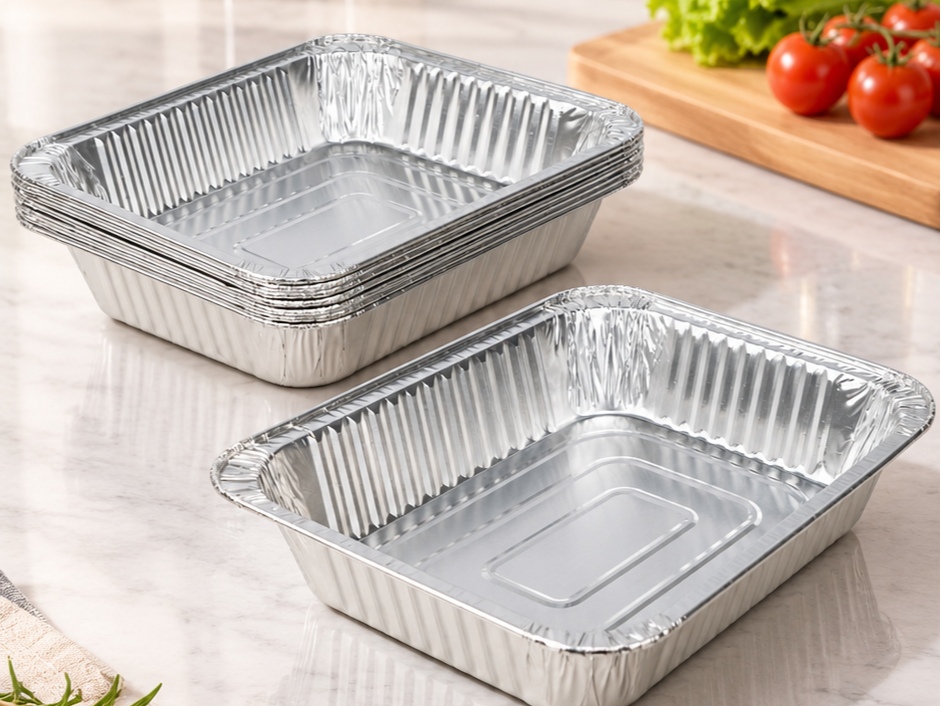
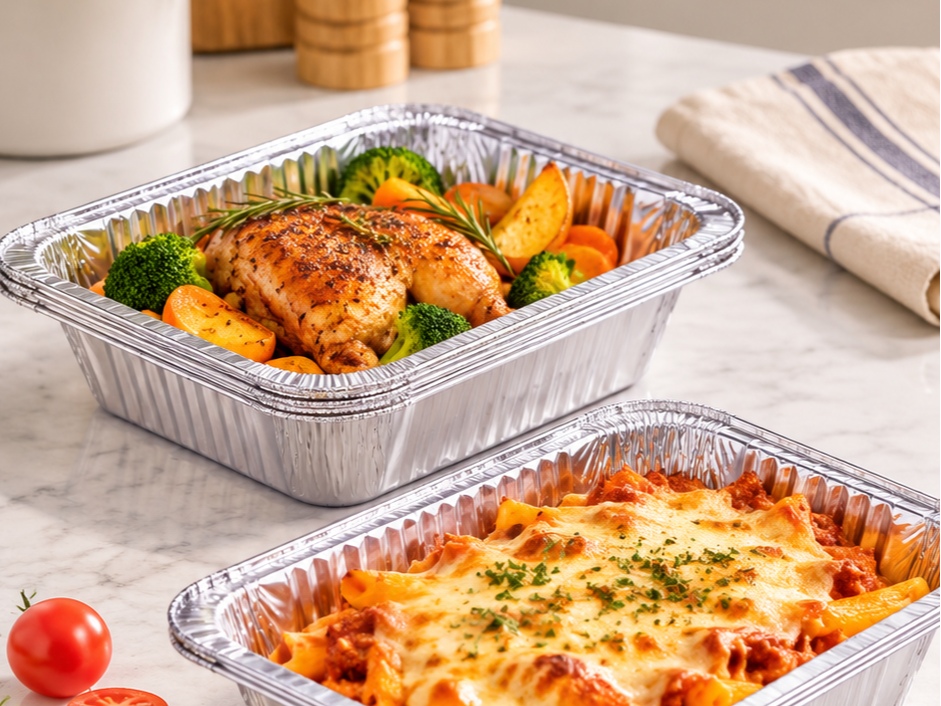
food packaging foil container (3)food packaging foil container (4)


How OEM/ODM Custom Aluminum Foil Trays Support Evolving Food Packaging Needs

While standard packaging products are convenient for many businesses, they do not always meet the specific requirements of every production or distribution process.


For food brands with precise portion requirements, private-label packaging initiatives, or large-scale catering operations, aluminum foil trays customized to their specific products may be more advantageous.

Customization can address a variety of practical needs:

Dimensions and Capacity: Different food items require specific container depths, opening diameters, and base dimensions. Proper sizing helps avoid wasted packaging space and ensures greater consistency in portion sizes.


Shape and Structural Design: Containers can be developed in round, square, rectangular, or specialized shapes to suit specific display and filling requirements.


Material Thickness: Selecting the right material specification helps balance product rigidity, formability, weight, and cost. The choice of material should be validated based on the container’s intended use, rather than relying solely on thickness.


Surface Appearance and Branding: Color options, embossed logos, and other custom features can help food brands establish a more consistent packaging identity. Consistency in Production: For distributors and established food manufacturers, consistent product dimensions and stable quality are essential when scaling up orders across multiple locations.


This is precisely where the value of an OEM/ODM partnership lies.


An experienced foil container manufacturer should be able to provide comprehensive support—from the initial specification-setting phase through mold development, sample creation, and production evaluation, all the way to full-scale mass production.


At the same time, customization should not introduce unnecessary complexity. The most practical solutions are generally those that meet the buyer’s functional requirements while ensuring control over material selection, component assembly, and production processes.


For European buyers, it is crucial to incorporate considerations regarding recyclability and food-contact compliance into the initial product brief. This allows suppliers to evaluate the chosen design before finalizing tooling and production decisions.


How Yunchu Supports Global B2B Aluminum Foil Packaging Buyers

Yunchu understands that packaging requirements are constantly evolving in response to shifts in the foodservice market and the regulatory landscape.


Established in 2004, Yunchu specializes in the R&D, production, and sale of aluminum foil containers for international B2B clients. Our product range includes smooth-wall aluminum foil containers, foodservice packaging, airline meal trays, silver and gold-colored containers, baking cups, disposable aluminum bowls, and customized food packaging solutions.


Our production capabilities include:

- Over 20 fully automated production lines.

- More than 1,000 specialized molds for various container designs.

- An in-house R&D team and an independent quality testing center.

- ISO 9001 Quality Management System certification.

- SGS food-grade safety certification.

- Extensive export experience, with products reaching over 50 countries and regions, serving more than 300 well-known brand clients.


Through our OEM/ODM services, clients can customize container dimensions, shapes, colors, embossed logos, and other specifications to suit their specific markets and applications.


From sample creation and mold development to production inspection and mass manufacturing, our goal is to provide reliable packaging solutions for food manufacturers, foodservice providers, packaging distributors, and private-label brands.


We also recognize that regulatory requirements must be met through product-specific information rather than general marketing claims. Certifications such as ISO 9001 or SGS food-grade compliance do not automatically guarantee adherence to all provisions of the Packaging and Packaging Waste Regulation (PPWR).


Therefore, when evaluating new packaging projects, buyers should clearly define their target markets, intended food applications, material requirements, and documentation needs. As a good foil container manufacturer, Yunchu is dedicated to supporting clients through practical OEM/ODM development, stable production, and product specifications tailored to their operational requirements.


To learn more about our aluminum foil packaging solutions, please visit Yunchu or contact our team to discuss your next project.


Looking Ahead: Shaping Packaging Decisions for the Next Five Years

The PPWR (Packaging and Packaging Waste Regulation) is more than just another regulatory update; it represents a broader shift in how the European market approaches the design, assessment, and management of packaging.


For food brands, processors, and procurement teams, the most effective response is to begin reviewing packaging systems now, rather than waiting until each future implementation milestone arrives.


Aluminum foil containers offer numerous practical advantages, including efficient heat transfer, a lightweight structure, and excellent flexibility. Nevertheless, when making packaging decisions, it is essential to consider the product’s entire configuration—including sealing methods, surface treatments, food-contact compliance, and local recycling infrastructure.


For those planning to launch new products or evaluating existing suppliers, selecting the right manufacturing partner is critical.


Whether you are sourcing standardized food service containers or developing custom aluminum foil trays for specific applications, an ideal OEM/ODM partner should not only be proficient in manufacturing processes but also possess a deep understanding of the business environment and practical needs of your target market.


At Yunchu, we believe that reliable packaging begins with a profound insight into the client’s actual usage scenarios. With extensive experience in manufacturing, product development, and quality management—combined with a highly responsive B2B collaboration model—we are committed to helping our partners build more robust and dependable food packaging supply chains.


Are you looking for a reliable supplier of aluminum foil containers for your next project? Reach out to Yunchu to discuss product specifications, OEM/ODM customization, and bulk supply requirements.


The regulatory information referenced in this article is based on publicly available EU documentation as of November 2026. Specific compliance obligations depend on the final packaged product, its intended use, applicable food-contact regulations, and relevant implementing acts. Purchasers should obtain technical documentation specific to the product and, where necessary, seek professional regulatory advice.

Related News
Leave me a message
X
We use cookies to offer you a better browsing experience, analyze site traffic and personalize content. By using this site, you agree to our use of cookies. Privacy Policy
RejectAccept